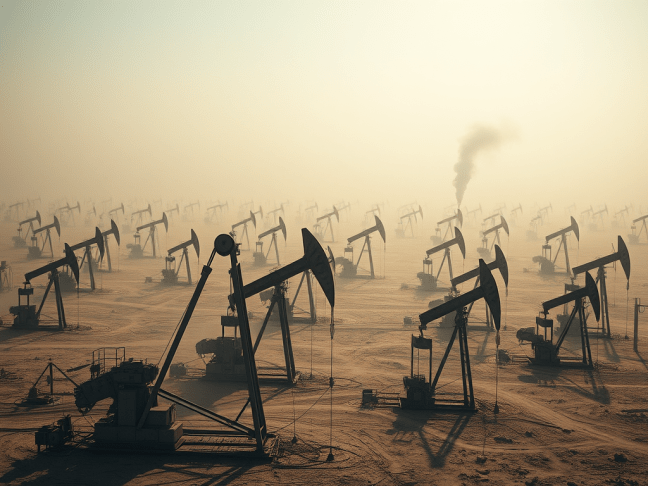
Earthconomics 101: There Is a Killer on the Loose

The reason Earth’s economy never endures boom-and-bust cycles is that everything in nature is reusable: someone's trash becomes someone else's food, on a planet where it is impossible for an ecosystem to ever go bankrupt. The remarkable feat of 10 million species coexisting in a small planet has only been possible because Earth long ago … Continue reading Earthconomics 101: There Is a Killer on the Loose

All Roads Lead to Self-Destruction

The problem with civilisation is that it is simply self-destructive: driven by profit and efficiency alone, self-programmed to implode by following a predictable recipe of maximum death/maximum profit economics.  This monstrous progeny of our greed now runs the planet.  It operates not on dreams, laughter, feelings, creativity, love, compassion or any of our best human … Continue reading All Roads Lead to Self-Destruction

Overshoot Deficit Disorder

When I warned years ago that the climate crisis would be completely forgotten in a few years, I was ignored like some type of attention-seeking “boy cried wolf” conspiracist.  But I meant what I said.  And I still mean it, and events prove me right.  Just look around, even the worst-case scenario didn’t look this … Continue reading Overshoot Deficit Disorder

Final Destination: Extinction

With a brain no longer fit for a world of scarcity, humans meet the definition of an evolutionary dead-end: a species unable to adapt.  Extinction events occur when environmental conditions change too rapidly for organisms to develop evolutionary adaptations, and this is precisely what is happening to humans.  Runaway climate change is altering Earth too fast … Continue reading Final Destination: Extinction

A Brain from Another Time

Our naturally dismissive attitude towards impending disasters is woven into the geological history of this planet.  Our brain did not evolve in the midst of catastrophes, but during one of the most climatically stable and abundant times in Earth’s history.  Resources were infinitely plentiful in relation to our consumption, and the climate remained stable enough … Continue reading A Brain from Another Time

Collapse Denial and the Trauma Response

Our brain has a dangerous affinity for stability: it desperately wants to believe in an unchanging world, even as the world changes.  This make-believe stability evolved as a survival mechanism that was fundamental to our feelings of safety, allowing us to "keep calm and carry on" even as our world went through mayhem.  Our brain … Continue reading Collapse Denial and the Trauma Response

Beyond Growth: Journey to Gaia 1

All growth leads to overshoot and the collapse of civilisations.  Any species overgrowing all others eventually suffers termination-level resource deficits both from the ecosystem (prey, raw materials) and the physical environment (habitable space, water, etc).  Humans crossed their survivability threshold thousands of years ago and have been sustained by completely artificial means ever since: intensive … Continue reading Beyond Growth: Journey to Gaia 1

The Biggest, Oldest Economy In The World Is Burning

With any economy, the faster you grow and expand, the sooner you die, just like an obesity patient.  There is, however, one economy in the world who has got it right.  It neither grows nor dies, and actually manages to stay the same, or at least it did, until recently.  It is the oldest economy … Continue reading The Biggest, Oldest Economy In The World Is Burning

City of The Burning Angels: A Prequel to Civilisational Collapse

The escalating financial cost of the climate crisis is beginning to bankrupt US disaster aid agencies while putting the final nails in the coffin of the already collapsing home insurance industry.  Approaching $300 billion and counting, the LA inferno has already become the costliest US disaster, beating Hurricane Katrina by $100 billion. With an increasingly … Continue reading City of The Burning Angels: A Prequel to Civilisational Collapse

The Myth of “The Evil 1%”

We have been inventing villains since the very beginning of our history.  One of the most popular villain narratives in the environmental movement is that everything is the fault of the rich, because they control everything and emit the most. A statistic that is usually thrown about is that 100 or so corporations are responsible … Continue reading The Myth of “The Evil 1%”