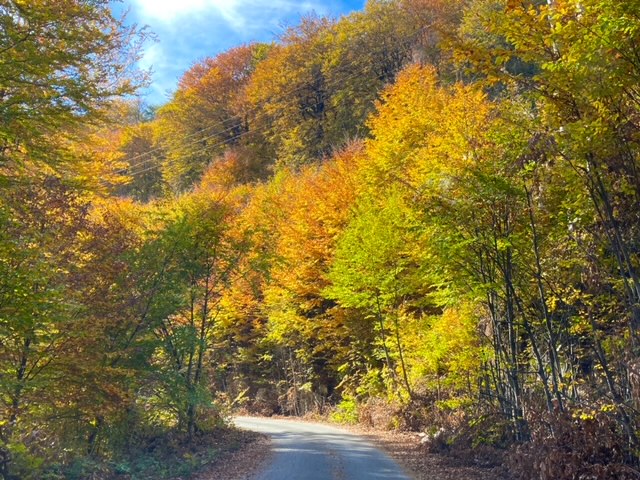
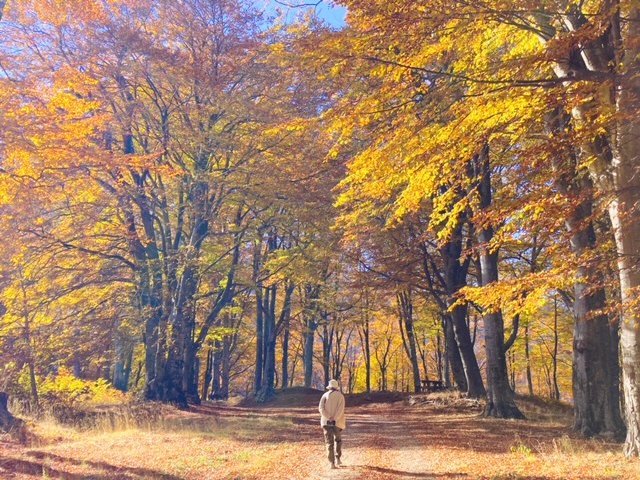
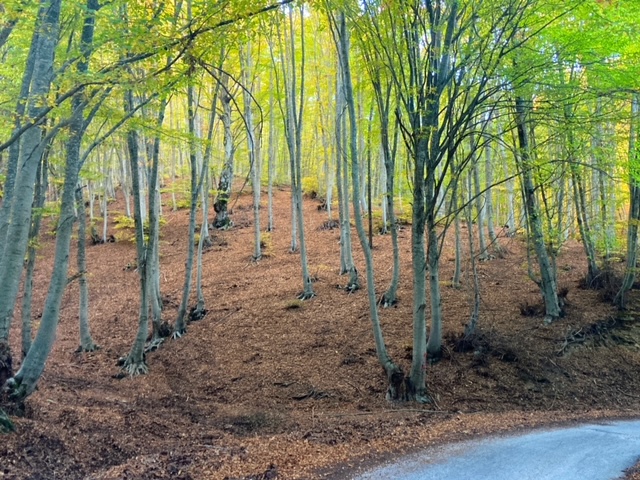
The silence was horrifying as we walked amongst huge ancient rows of beech trees bathed in autumnal sunlight. Everything was so quiet that it felt almost unreal, like we had been dropped inside a postcard frozen in time and given permission to walk about for a bit before it all came back to life. The entire forest was in mourning, still exhausted from the longest summer ever. Too few insects and birds, and no birdsong whatsoever. We only noticed the birds when they dragged their feet across the road, tiptoeing in the shadows like war refugees afraid they’ll be spotted by a sniper. They must have been starving, or just not in the mood for anything. No curiosity, no desire to see us or greet us. It seemed to me that they somehow knew who we were. We were the ones who had stolen their future.
Everywhere I looked, there were signs of plant exhaustion from the scorching summer. But the summer had ended a full two months ago. You would normally expect fresh autumnal growth everywhere by now. But the September rains never came. The October rains never came either. The sound of autumn leaves crunching under our feet was the only audible stimulus – that, and the remote buzzing of helicopters in the distance, putting out yet another fire on the other side of the mountain.
The leaves that we walked on were not simply dry. They were completely desiccated into dry crisps, curled up into tiny Cuban cigars and piled up like pot pourri under the trees. With each footstep, a loud crunch informed me that this forest had not seen rain in months. I dug into the soil with a stick to confirm. It was bone dry, a grey-brown dust that had no smell to it. All the microbes had died.
Mount Pangeon is one of Northern Greece’s natural beauty gems which sits next to the Rhodopi mountain chain, Europe’s number one biodiversity hotspot which extends well into Bulgaria and hosts both Southern European and Northern European species of plants and animals. I’ve been coming here since I was a kid, 50 years ago. But comparing the present to the past, it feels like my childhood happened on another planet. I remember snow sledding in the winter, and wildflowers in the spring. I remember walking down the road and picking wild raspberries, strawberries and blackberries in the middle of the summer, dressed in long sleeves. This is not the forest I grew up with. This is a dying forest. A hot 20 C for late October at an altitude of 2,000 metres is not normal on this mountain.
We continue our trek to places and scenic spots along the way, each one infused with rich memories of family picnics, birthdays, national holidays and so on. I visit the secret valley where I found the rare Pangeon martagon lily more than 40 years ago, which I wrote a story about. All the giant ferns are still there, but they are scorched. At least some of them should normally be green at this time of year.
We drive further in my fossil fuelled car, rented just for the day. Our mood gradually becomes pensive as we realise that we are not revisiting a mountain but saying goodbye to an ecosystem in its deathbed. It is beyond my comprehension that we, the humans, are bringing all of this to an end. And even more painful to realise that we know we are doing this, yet we don’t care.
A headache begins to form. Perhaps it was the altitude, or the heat. Perhaps the fact that I feel so nauseous from the horror, as I mourn not just my own childhood, but that of both past and future humans. The grief is just too much to take. We begin the drive back down, back to our crowded, toxic, unsustainable lifestyle which we call “civilisation”. We go back, forgetting the dying mountain with the scorched trees and hungry bird zombies. We didn’t visit the part of the mountain which was burning all summer. We just heard the firefighting helicopters and planes all day, as they collected seawater to dump onto the fires of Pangeon. They were all powered by fossil fuel.
The ancient ecosystem of Pangeon is dying just as unique, endemic species of plants are still being discovered. This is not just part of natural history. It is part of human history, mentioned in Ancient Greek texts and myths. But for the modern human ecology does not exist.
Ecology is bigger than capitalism, bigger than human civilisation itself. Yet for most of us ecology takes place somewhere in the sidelines of our existence, or in a classroom. We fail to grasp the gravity of our ignorance of basically almost everything that exists. On a planet with 10 million species, well over a third of habitable land has been modified by just one: humans. This is not a civilisation. This must be a type of infestation.
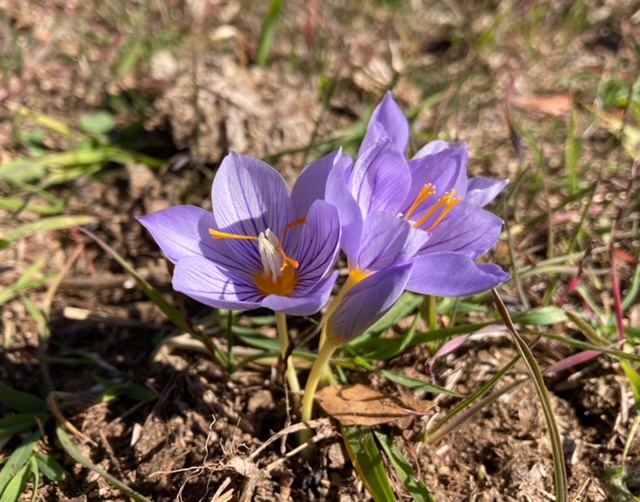
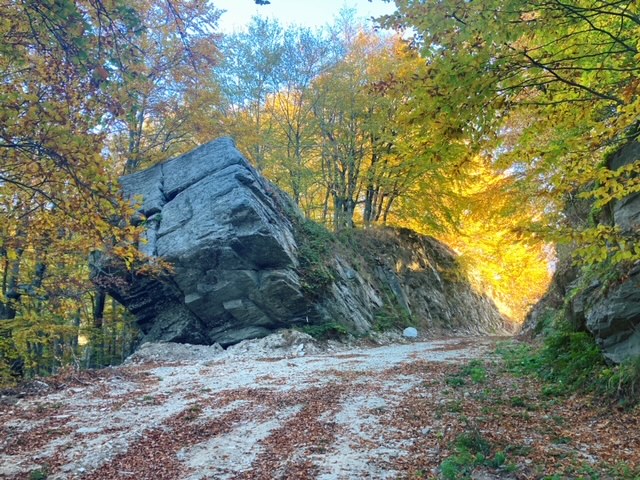
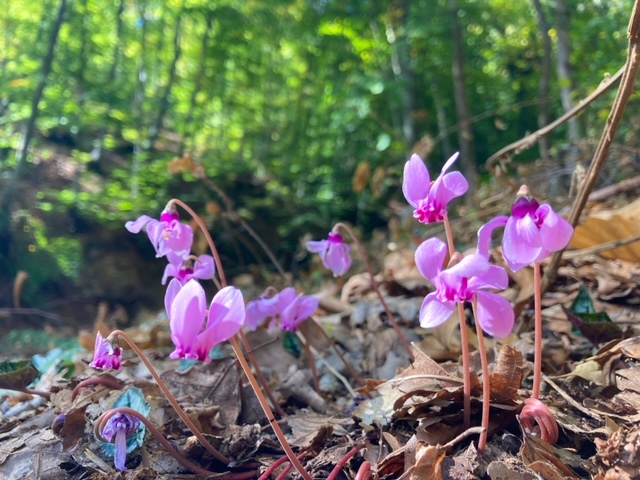
(All images from Pangeon, October 27, 2024)
George is an author, researcher, molecular biologist and food scientist. You can follow him on Twitter @99blackbaloons
Discover my Books Here
Note to my readers: I keep my site FREE because it’s not right to paywall existentially important content during an existential crisis. But if you appreciate any of the work I’ve done over the years, please consider joining as a paid subscriber so it can continue! I have minimal overheads, no sponsors to sell myself to, bosses who tell me what to write, or staff I have to pay. It’s just me. This freedom does mean though that your support is vital. Thank you so much!
Discover more from George Tsakraklides
Subscribe to get the latest posts sent to your email.
 George Tsakraklides
I, too, have been mortified by the stillness of a Swedish forest — even being quite prepared for it via my cognitive awareness of plummeting animal populations. It’s eerie to walk in such stillness, so completely surrounded by nature.
Some people don’t notice due to the Shifting Baselines effect:
“Shifting baseline describes a gradual change in our accepted norms and expectations for the environment across generations. Our tolerance for environmental degradation increases and our expectations for the natural world are lowered.”
Members of my Landcare group call it “landscape blindness”. We are all prone to it. That is why we need to maintain monitoring points where we can photograph the effects of our weed removal and planting actions. Without photos we quickly forget the changes that are made.