
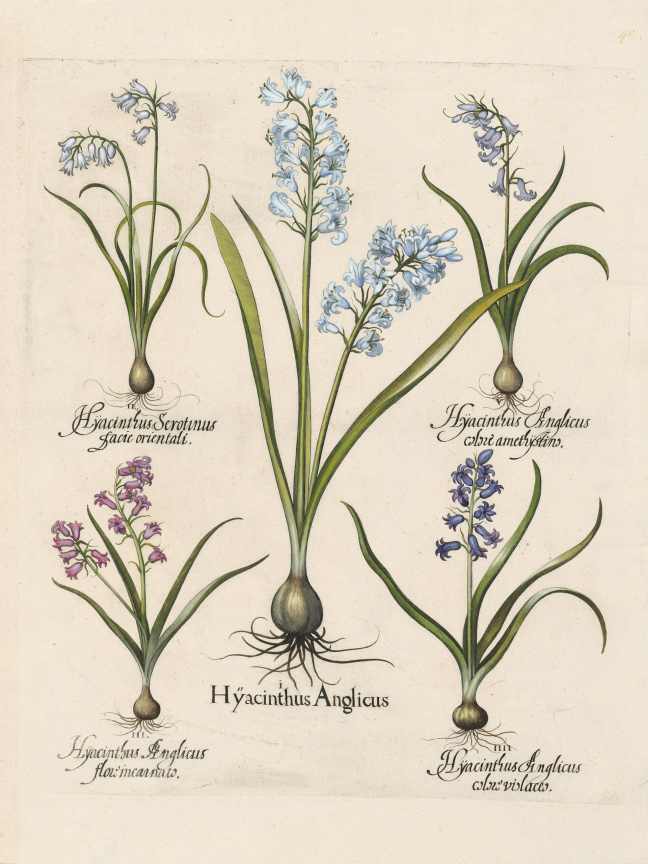
As the human world succumbs to the grip of autocracy, we are never short of examples from the natural world where nature itself successfully revolted against power. Today I bring you another story of a failed coup: the failed domestication of the hyacinth.
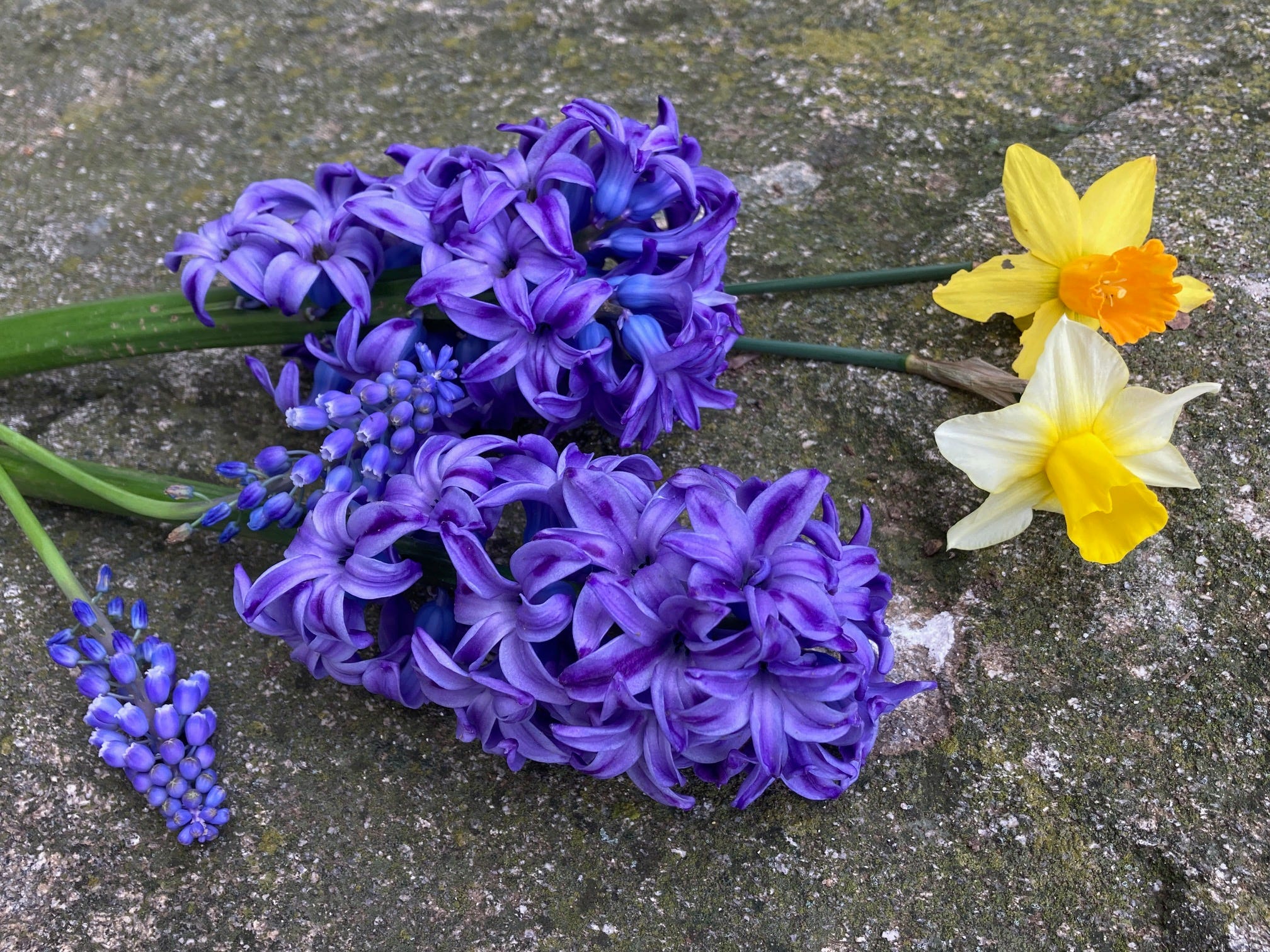
The dominant logic of plant breeding has always been to maximize the most monetizable quality of a plant: corn was bred to make bigger corn cobs, tomatoes were bred to make sweeter fruit, and flowers were bred to make bigger blooms. Like other ornamental plants, hyacinths have over the centuries been genetically selected for larger blooms with an intense scent and a vibrant colour range. Modern garden hyacinths look luscious and extravagant because they were bred to be big spenders, channelling all their energy into producing huge flowers at the expense of overall plant health. You often see the stems topple over from the weight of the inflorescence, and this is how you know they are hybrids: flowers of this size are unnatural for the plant, and the consequences to the plant’s health are serious. Despite their beauty, the hybrid plants are largely sterile, rarely ever producing seed. By the time the huge flower develops, the plant is too exhausted to make progeny.
What has happened here is a genetic coup: in hybrid plants, the genes responsible for flowering are given disproportional executive superpowers and the ability to channel all the energy of the leaves, the bulb and the roots, into expensive flowers for “the regime”. It is a genomic autocracy, and this is how all plant breeding works: rather than deleting genes outright, plant breeding messes with the hierarchy: it downgrades most genes by placing them under the control of an oligarchy of traits, in this case, the traits related to flowering. Like all disposable products and people in a single-use capitalist economy, garden cultivars are bred to look good, die fast, and leave no progeny. They are destined to be produced in large numbers, sold, admired and quickly terminated. They are no longer organisms but products.
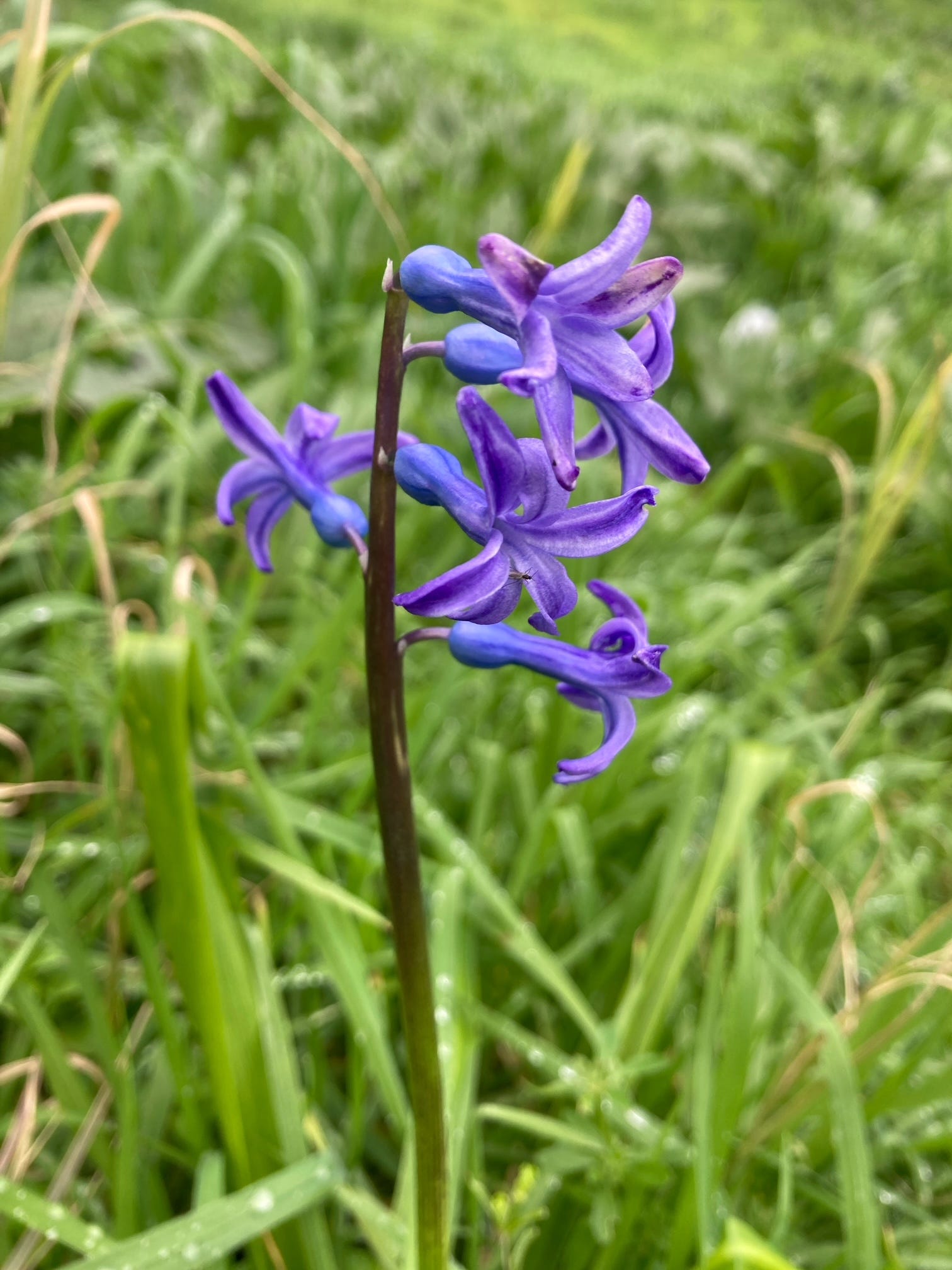
But nature has a trick up her sleeve, because every hyacinth hides a ferocious rebel inside. Many of the ancient genes of the wild-type ancestor, hyacinthus orientalis, are still present in modern garden cultivars and hybridized varieties. These wild genes may be suppressed, but it doesn’t take much for them to rise up. Each spring on my walk along the coast I always run into plants that escaped the death sentence of domestication and became wild again, and blue hyacinths are among them. They look just like the wild species, but they are in fact descendants of formerly enslaved garden plants. They are a result of a genetic revolt, what happens when wild-type genes reassert their dominance. It turns out that, despite all the effort that goes into plant breeding, genomic autocracies are not inherited into the next generation. They are in fact, highly unstable. Seedlings of hybrids often look like wild-type plants, as the organism’s DNA reverts back to its factory settings: this is the most stable configuration of genes, one which ensures maximum survival.
What is most fascinating about wild-type plants is the diversity of genotypes and phenotypes that exist, in contrast to branded cultivars of plants and animals that are essentially cloned populations of one genotype. For example, in the wild you will see both scented and unscented hyacinths within the same species. Some plants will attract insects with scent, others choose to do so using flower features like shape and colour variation. No two wild-type plants are the same, just as no two humans are the same. Capitalist autocracies try to make everyone identical like sausages on a factory conveyor belt. Anything that looks different is immediately discarded as “misshapen” and useless, just because it deviated from the mean. But humans aren’t products on a conveyor belt. Like other organisms they are meant to look wildly different from each other, not the identical corporate human dolls this system tries to maim us into. Our natural state is to be free to be who we are, for us, and for no one else. This is not a metaphor, but a biological pattern. Our genes know this, but our masters are ignoring it.
Wild-type genes are present in all species, including humans. True emancipation comes equally from accepting who we are and through rejecting any system that attempts to homogenise us. All we need to do is listen to the ancestral voice, and have faith in what nature gave us. Resistance is built into our wild-type genes, and anarchy against power is not an ideology, but part of our biology. Part of being a real human.
Thank you very much for reading. This is a reader-supported publication. To receive new posts and support my work, consider becoming a free or paid subscriber.
Discover more from George Tsakraklides
Subscribe to get the latest posts sent to your email.
 George Tsakraklides