In a recent YouTube interview about my new book The Biology of Collapse, I was asked what timetable I gave for “The Collapse”, as if I was some type of Nostradamus-type guru who can predict the day when the sky will fall. I’m afraid that collapse does not work that way. It is neither a sci-fi moment nor a Hollywood scene. It is much less glamorous, much less visible, depressingly boring, and very slow. So slow in fact that, you might think that even as it actually unfolds, you still have all the time in the world to reverse it. But many times you don’t, and I’ll explain why.
Collapse, whether ecological, economic, spiritual or other, is a set of falling dominos. Each new fall makes the next one more likely, much like falling down the stairs: if you’re lucky you may get stuck somewhere along the staircase on your way down, but chances are that gravity will get the upper hand. You will continue to roll down like an avalanche, accumulating injuries along the way that make your recovery less, and less likely. It becomes a doom loop.
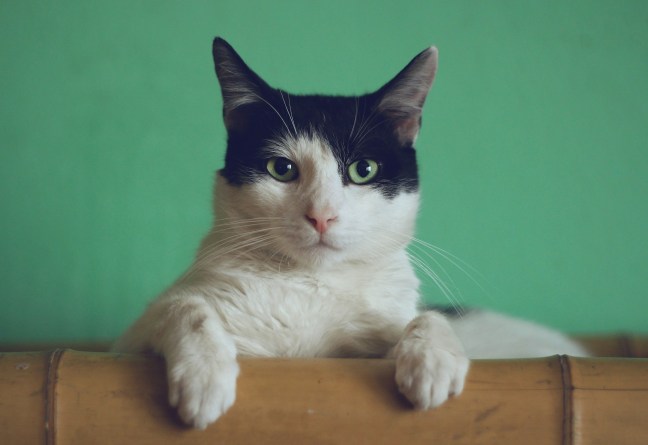
Three weeks ago, on my way back from dinner, a cat on the street scratched me really badly. The wound was deep and got infected within minutes. I didn’t go to the A&E until the next day because I had no idea cats, even vaccinated ones, harbour such a plethora of life-threatening bacteria under their nails.
This was my first step in my fall down the stairs, which was handled through an emergency tetanus vaccine, a potent antibody shot, and three types of antibiotics totalling a huge, 3000 milligram dose of chemicals daily. Even though the drug cocktail was enough to kill the infection and avoid the worse case scenario of losing an entire limb, it created the conditions for my descent into Step Two down the stairs.
You see, I have a neurological and musculoskeletal condition that does not like antibiotics. It flared up immediately, reversing many months of hard-earned progress. My stomach was also totally annihilated by the drugs, a more predictable side effect. A week into the antibiotics I had already become weak, and sick. I had to modify my diet down to simple carbs and little to no vitamin intake in the hope of my gut recovering, which only weakened me further. And I made the dreadful mistake of focusing on boiled rice, which has a very high glycemic index. I’ve had extremely low blood pressure all my life, something which I’ve managed. But under this new high glycemic index diet my body constantly went in and out of coma all day, a situation exacerbated by a historic heatwave that just would not let. I felt so weak and sick, I had already forgotten the original, life-threatening cat scratch. I was well into Step Two, trying to get my health back after the antibiotic course from hell.
Step Three in the domino was only around the corner. It came in the middle of the night as I was awakened by gut pain. I got up to go to the bathroom, but because I got another fainting spell due to my poor diet, I woke up seconds later face down on the bathroom floor, staring at my own pool of blood. I had hit my head pretty bad and split my lip open. The teeth survived, and I had no brain damage. But I was back at the A&E for the second time in a fortnight, in the middle of the night. I am recovering well, but I’ve learned a big lesson which applies to what our civilisation is going through at the moment: It won’t be a single thing that kills us, but a combination of factors that feed into each other, and from each other. The more we destabilise this planet, the more factors of collapse we bring into the picture.
In healthcare there is a term called “comorbidities” which refers to all the chronic conditions a patient has that may exacerbate their MAIN condition. Comorbidities are not the main disease, but they have the annoying characteristic that they raise their head just when you get sick with something serious. I had been in control of my low blood pressure for years, through diet and exercise. My sciatica and other musculoskeletal conditions had significantly improved over the years. These were comorbidities I was living with, quite successfully, because there was a healthy body and mind to support me. But just like Murphy’s law, it only took a single cat scratch for all of these comorbidities to raise their ugly head, and exacerbate a bad situation.
As this civilisation keeps falling down the stairs, how many hidden economic, social, structural, political and institutional comorbidities does it suffer from that it is not even aware of? The list is endless, because most comorbidities only announce themselves during a crisis. Quite simply, we are not made to survive what is coming.
To answer the question I was asked at the interview, we are already well into our journey down the stairs. Our food supply is about to go, and as food security and resilience researcher Florian Ulrich said on the World Adaptation Forum that I also attended last spring, almost every civilisational collapse was preceded by a food crisis. Enough said.
So, the answer to the question in the title of this essay is Yes: a single cat scratch may actually begin the domino effect. Unless we start taking care of the whole body, which is our planet’s ecosystems and climate systems, our social and economic comorbidities, weaknesses and design faults will be the end of us. Like I said, The End is much more boring, and predictable, than you might have expected. I was grateful to the doctors, the Greek government for providing free healthcare even though I’m uninsured, and even grateful to the nurse in the corner that played Duolingo all night. But I know that one day this whole civilisation will show up at the A&E, only to find that the A&E no longer exists.
Thank you for reading. By joining other paid subscribers you can help this work continue. Thank you to all existing supporters, I couldn’t continue this without you.
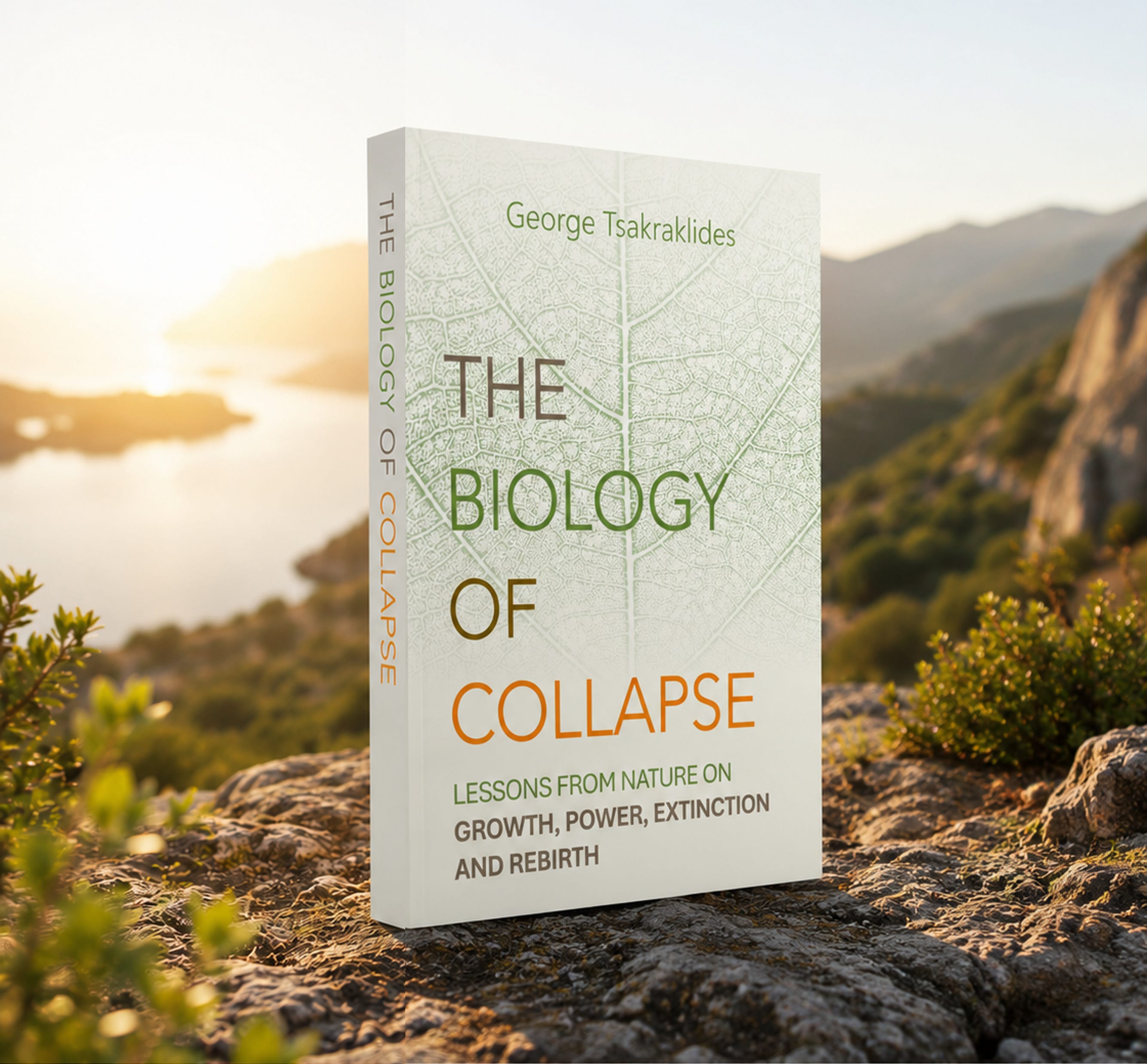
My new book, The Biology of Collapse is OUT NOW:
Discover more from George Tsakraklides
Subscribe to get the latest posts sent to your email.

