
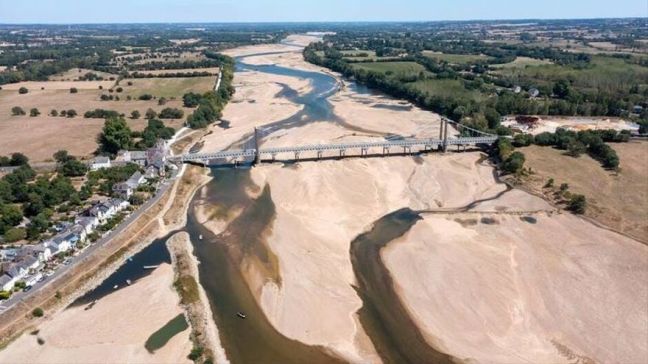
In Greece there is a proverb that goes: “the river of history never flows backwards” – meaning, what’s done is done, it can never be undone. The proverb is an apt metaphor for the geological history of the planet as the climate crisis unfolds, but also a tragic irony given that it is a literal description of what is happening on the ground. The rivers of Europe, as of 2026, will never flow again the way they once did. What is happening is permanent.
Rivers are the veins of the ecosystem and the circulation infrastructure that feeds almost all civilisations. Imagine if there was no blood in your arteries: this is what is happening to an entire continent. It is not an imminent food crisis, but worse: a dry tsunami of cataclysmic economic cascades that should really be described by their real name: civilisational collapse.
I know that my readers don’t need to hear this and that I am preaching to the converted. But just as you think you are “psychologically prepared”, I don’t think ANY of us are. We are talking about famine, malnutrition, destitution. No civilisation ever survived without food. Food is not only nutrition. It is culture. It is community. It is creativity. Family. We may have technologies to make disgusting slop for us to eat three times a day, but I don’t want to live in that society. We are creating the conditions under which billions of humans will starve to death so that a minority can keep on using data centres. This is not inequality. I have no words to describe what this is other than Necrocapitalism on steroids.
So, here’s some fun information about the 5 rivers going dry, and some of the most iconic products disappearing:
1. Po River (Italy’s “Food Valley”)
Here are some iconic products that are totally fucked:
- Parmesan Cheese: Requires vast quantities of water to grow the specific alfalfa and forage fed to dairy cows in Emilia-Romagna.
- Balsamic Vinegar: Trebbiano and Lambrusco grape vineyards in the Po floodplains face extreme heat and water stress.
- Veronese & Carnaroli Rice: Cultivated in flooded paddies along the Po basin (Lomellina and Veneto), which face drying canals and saltwater contamination.
- Prosciutto di Parma ham: Dependent on swine raised on whey—a byproduct of Parmigiano production—alongside Po-irrigated grain feed.
- Grana Padano cheese: Heavy milk production across Lombardy and Veneto relies on direct irrigation from Po tributaries.
- Scardovari Clams: Harvested in the Po Delta, where rising water temperatures and hyper-salinity destroy brackish lagoon ecosystems.
2. Rhine River (Germany, France, Switzerland, Netherlands)
Europe’s most vital commercial waterway fuels extensive river-valley viticulture and high-yield crops.
- Riesling Wines (Mittelrhein, Rheingau, Mosel): Steep-slope vineyards along the Rhine face sunburn and water stress, altering sugar-to-acid balances.
- Spreewald Gherkins : Cultivated in feed-basins connected to northern Rhine-Elbe hydrology; water shortages reduce crop yields.
- Spargel (Schwetzingen & Lower Rhine White Asparagus): Delicate sandy-soil crops dependent on stable water tables fed by the Rhine system.
- Alsace Gewürztraminer & Pinot Gris: Vineyards along the French upper Rhine plain face severe moisture deficits.
- Rhenish Sugar Beets: Critical for regional sugar refining; drought severely reduces yield and root density.
- Gouda & Edam Cheeses (Netherlands): Dutch lowlands rely on Rhine-fed river management to prevent peat-soil subsidence and keep pasturelands green for dairy cattle.
3. Loire River (France)
France’s longest river irrigates legendary wine regions and vegetable-growing valleys, but receding flows leave large stretches of the riverbed exposed:
- Sancerre & Pouilly-Fumé Wines: Sauvignon Blanc vines growing on limestone hills along the upper Loire suffer severe drought stress.
- Sauumur-Champigny & Chinon (Cabernet Franc): Mid-Loire red wines face premature ripening and crop loss from heat waves.
- Mâche de Nantes (Lamb’s Lettuce): The Loire estuary produces most of Europe’s corn salad, which relies on consistent river-basin irrigation.
- Anjou Pears (Poire Tapée): Orchards along the Loire valley suffer fruit drop under prolonged drought conditions.
- Valençay & Sainte-Maure de Touraine Goat Cheeses: Local goat herds depend on fresh river-irrigated forage and pasture.
4. Danube River (Germany, Austria, Hungary, Serbia, Romania)
Flowing through 10 countries, the shrinking Danube jeopardizes major European grain belt irrigation and regional heritage crops:
- Kalocsa & Szeged Paprika (Hungary): Famous pepper fields along the Hungarian Danube basin require heavy irrigation to develop sweet capsicum profiles.
- Romanian Maize & Sunflower Oil: Southern Romanian plains near the Danube face massive crop failures when river irrigation pumps fail.
- Wachau Grüner Veltliner (Austria): Terraced vineyards overlooking the Danube in Austria experience heat and moisture deficits.
- Serbian Plum (Šljiva) & Raspberry Belts: Central Balkan Danube tributaries face shrinking water tables critical for fruit orchards.
- Pannonian Wheat: Hungarian and Serbian breadbaskets suffer reduced grain density and lower harvest yields.
5. Guadalquivir River (Spain)
The lifeblood of Andalusian agriculture, the Guadalquivir basin powers Spain’s olive oil and produce export economy:
- Extra Virgin Olive Oil: The world’s primary olive oil production hub suffers drastic yield drops during river-basin droughts.
- Jerez / Sherry Vinegar & Wine: Palomino grape vineyards near the Guadalquivir estuary face extreme soil desiccation.
- Los Palacios Tomatoes: Famous Andalusian “bombón” tomatoes depend directly on Guadalquivir canal irrigation networks.
- Andalusian Citrus (Valenciana & Salustiana Oranges): Orchards along the Guadalquivir valley face strict water rationing.
- Ibérico Ham (Jamón de Jabugo/Los Pedroches): Drought damages oak tree acorn (bellota) yields, directly impacting free-range pig fattening cycles.
Our food is about to change, drastically. Many products will disappear forever, hopefully mostly meat products. It is incredible how many of the products on the list above are gourmet produce with huge environmental impact we should not be consuming anyway. So, there will be some rare upsides to this as our ludicrously extravagant food web becomes simplified, but there will be too many funerals in the meanwhile to notice them. Each of the Four Horsemen of the Apocalypse will have a river all to themselves, now that they can gallop up and down the dried-up veins of Europe. River number 5 will have its own henchman: the data centres sucking up the river, down to the last water droplet, as humans die off.
- The White Horse (Conquest/Pestilence): Symbolizes conquest, deception, or widespread disease, wearing a crown and carrying a bow.
- The Red Horse (War): Symbolizes mass warfare and conflict, carrying a massive sword to take peace from the earth.
- The Black Horse (Famine): Symbolizes scarcity and economic collapse, carrying a pair of weighing scales to ration food.
- The Pale Horse (Death): Symbolizes total destruction, followed closely by Hades, with the power to kill by sword, famine, and wild beasts.
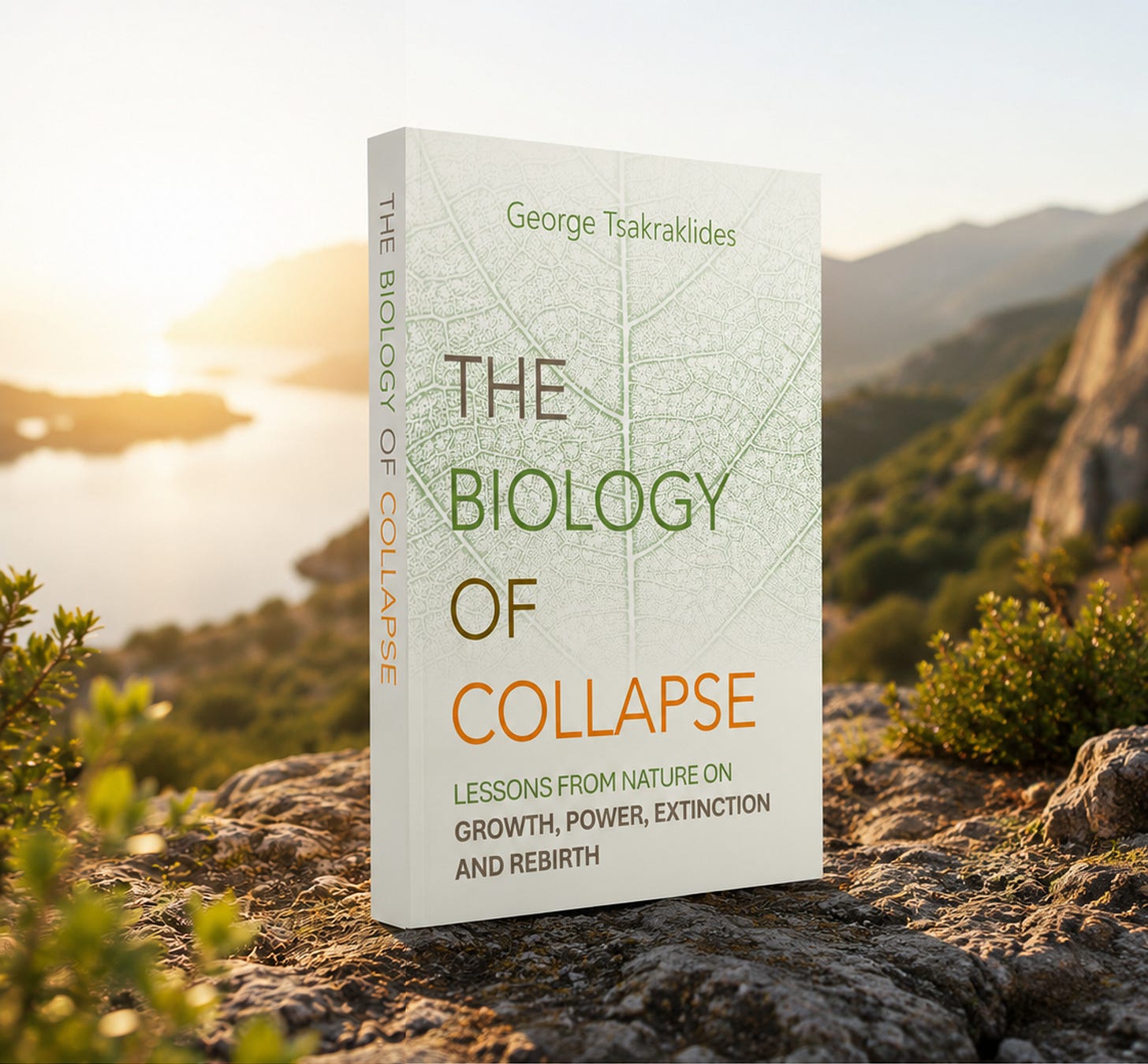
- Thank you for reading. By joining other paid subscribers you can help this work continue. Thank you to all existing supporters, I couldn’t continue this without you. My new book, The Biology of Collapse is OUT NOW:

Discover more from George Tsakraklides
Subscribe to get the latest posts sent to your email.

