
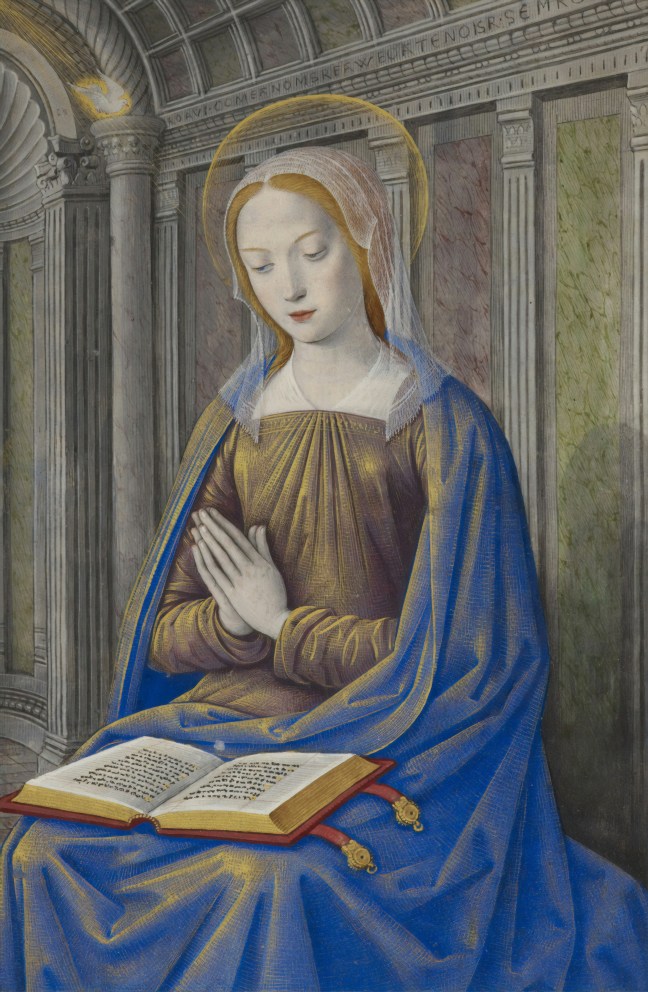
Desperate to denounce their mortality, humans always found refuge in some of the most ludicrous supremacy hallucinations. The majority of these fantasies, which soon morphed into organised religions, usually concurred that humans had appeared suddenly, spontaneously, and independently from everything else, and that quite possibly they were not even originally from Earth – yet somehow had ended up here, presumably to fill some type of acute, temporary leadership gap before going back up to Heaven or whatever the spaceship that brought them here was called. According to one Christian fantasy, we appeared suddenly one day, more specifically on the 6th day of an ambitious project called “the creation”, completely independently from all other animals and plants who of course, we had absolutely no relation to (nor did we want to have one).
The impact on the subsequent evolution of human civilisations inflicted by the distortion of our self-perception by these religions cannot be overstated. Armed with Jesus syndrome, we carried on like entitled, arrogant brats, inflicting extinction in the name of human exceptionalism and never stopping short of wielding supremacy as the ideological weapon of choice against members of our own species. The industrial revolution, the space-age look and feel of our cities, cars, and gadgets, became the necessary props in the Hollywood movie set of this impossible narrative where, humans were not really from Earth, but forced to live here after leaving their home, Heaven, a place that science has still not located to this day.
The narratives we crafted around ourselves in The Bible could have easily been put together by a first-grade brat that had just come back from raiding the sweetshop, blaming everything on their imaginary friend: God, or something else out there, had twisted our arm and persuaded us to settle on this planet where everything was so incredibly stupid, and we, the humans, were the last hope that this place had to ever make something useful out of itself. Begrudgingly, we accepted the challenge of heading things up “down here”, even though we were in the disappointing company of 10 million species that were so incredibly and abysmally dumb, it was depressing to say the least. But we turned it into an opportunity: we figured, it would probably be an honour for them to suffer oppression and extinction at the hands of a much more refined, intelligent being from another world. So, we obliged.
I am not psychiatrically trained, but I think that, If there is anything that a psychologist can safely deduct from all of these religions, it is probably that they were created by a species deeply ashamed of its real beginnings, and resentful of any reminders that they might be just as fragile, flawed and mortal as the 10 million species they had oppressed – let alone no less entitled to this planet than them. The rush to quickly burry any evidence of the long-haired, unshowered, “uncultured” ape-like human was frantic, clumsy, and desperate. The Hollywood movie set of futuristic objects grew at the same speed as our lies, until it was big enough to convince us that ape humans had been a hoax, or at best, a bad memory that can now be safely tucked into evolutionary anthropology textbook illustrations where an ape mutates into an upright Homo sapiens by just taking a few steps, as they drop the stone tools in exchange for a smartphone. Our modern civilizations were constructed on this supremacist basis: to shield and distract us from anything that might remind us that we are in fact, from Earth, that at some point fairly recently we had come from the “wild”, out of the swampy jungles and savannahs, just like other beings – and that this is where all of our molecules ultimately return when we die, whether we like it or not.
This deep contempt for nature was in fact a contempt for mortality, for being part of a circular economy where we are forced to surrender our molecules after our death, to whichever life form makes use of them next. Death itself was perceived as a blatant violation of the brat’s ego. So, our religions devised a myriad of fantastical alternatives to death: “afterlives” where we got to hold on to life for a little while longer. Various versions of Paradise soon emerged, but they all had one thing in common: paradise was a place where the brat finally got its way, having as much cake as it wanted, forever and into eternity. If there was ever a more anti-ecological, anti-nature, anti-life manifesto, it was Christianity. Our civilizations nurtured a deep contempt for nature and the natural cycles of death and rebirth: death was never natural. It was a punishment reserved for those who did not deserve the Afterlife, as well as for the plain old losers.
It is most ironic that, in our idiotic quest to shield ourselves from any reminders of our mortality, we created civilisations toxic to all life. We destroyed nature and self-harmed with meaningless soul-sucking “bullshit jobs” that only pushed paper and CO2 around the globe, pushing us ever closer to extinction for the meagre reward of a salary. Are these the “spaceship humans” we had envisioned to become all along? It would seem that, rather than coming face to face with the frightening thought of mortality, we cowardly opted to chase after the next religion, consumer product, or technological addiction. Today even as this self-harming civilization becomes toxic to itself, keeping the delusion alive through distractions is more critical than ever.
It is time we review the sycophantic lies our ancestors and their religions fabricated about nature, and restore its image as a system that we should be emulating rather than ridiculing. The natural ecosystem which we consider “wild” and “stupid”, is in fact the only truly intelligent, sustainable and self-aware civilization that has ever existed. Nature is neither “wild” nor some type of unruly jungle. It is the result of careful, strict, precise design guided by the laws of physics and governed by principles of sustainability, circularity, and regeneration – the very qualities all human civilisations, businesses and societies lack. Nature’s economy is self-sufficient, self-propelling and collectively and democratically operated. It doesn’t need electricity, jobs, money or supermarket food. It doesn’t fret constantly about its GDP. It has what it has, and it doesn’t ask for more. Nature already knows it is wealthy. It is content as it is. Humans are not, and this is why they will soon lose everything.
This is a reader-supported publication and my main source of income. By becoming a paid subscriber you can join other readers who are supporting my work and ensuring this newsletter can continue. Thank you so much for all your support!
Discover more from George Tsakraklides
Subscribe to get the latest posts sent to your email.
 George Tsakraklides
Thank you George, exactly right! These myths were essential for population control.
Thanks for reading Kathleen!
I wonder what would happen if a high school teacher directed her students to read this essay and debate any criticism of it?
By the way, your essay perfectly articulates my view of religion. Thanks for your excellent writing.
thank you very much Dave!
Well Adam was given the task to name the animals while Noah was given the task of saving the animals while the Earth was purged of humans so the caretaker trope was there for the seizing but we picked the smash and destroy trope instead. and yes, I agree, we are very humiliated by our origins and unhappy to grasp the concept of God while remaining animal and mortal- not God.
To me, the single most interesting quality of H. sapiens is our intolerance for reality. Human societies everywhere always live out of socially constructed fantasies that often don’t even overlap with the external world. This article illustrates, again, that one can never overstate humanity’s capacity for self-delusion.