
The belief that a small group of individuals forming a “government” can be trusted to represent the best interests of its people has been one of the most disastrous leaps of faith our civilisation ever took. Some may argue that as our societies grew, we had no choice but to form administrative superstructures that could manage the increasing list of problems large populations come with. Indeed, although transferring power from the masses to a group of leaders may seem undemocratic, which it is, it did serve some practical functions: it pooled and organised resources, brought a sense of unity to the population, and cultivated a much-needed illusion of belonging: to a place, a nation, a religion, an idea.
Or so they told us. The limited yet very sellable advantages of governments were used over and over as propaganda by governments themselves to justify their existence, driving through the urban myth that without a strong centralised authority, society immediately collapses.
Governments were always at best more of a necessary evil rather than a critical necessity, and the history of their evolution proves this. While it is easy to assume that governments came into existence out of a dire social need, the truth is that most times they came into our lives completely uninvited, emerging spontaneously much like aggressive weeds in a garden before forcing themselves on us whether we liked them or not. Governing authorities began their existence as savage forms of raw power in its most primitive iteration: groups of thugs, spiritual fraudsters, self-appointed landowners or representatives of God. To maintain control of all that they had seized, these protogovernments immediately relied on nationalist narratives aiming to convince people that the government was here to protect the community from impending existential threats. Religion, fictional villains, race supremacy and many other manufactured fairy tales became dogmas so vital to the survival of authority that, you could say that the institution of government itself owes its very existence to the propagation of these narratives. The relationship between government and religion, government and capital and government and war is so old and co-dependent that, it would be pointless to even discuss which of these came first.
This newsletter is my main income. It is COMPLETELY FREE to subscribe to, but made possible by the generosity of paid members. If you’d like to support The George Tsakraklides View please consider a paid subscription. Thank you.
History shows us that governments came into existence first and foremost to help themselves, not society. Governments always were, and continue to be, systems of control over people for the sole purpose of concentrating economic power in the hands of the few. As long as a handful of leaders are trusted to represent an entire nation, paid to represent the rich, and ultimately only represent themselves, any form of government is and will always be an oligarchy no matter how many hundreds of years into the future the institution of government persists. As long as power becomes concentrated, it will always be corrupted whether we are talking about tribal thugs, theocracy, monarchy, parliamentary democracy, dictatorship or the totalitarian meta terror state.
Thousands of years on, governments still fail to deliver on even the most basic of expectations listed in their original campaign claims. The touted benefits of government seem to be accompanied by a disproportionately long list of downsides, asterisks and complications that are enough to make one seriously wonder: were governments actually ever worth the effort? The pooling of resources in practice meant the accumulation of these resources within the hands of the corrupt few. Social unity became a right-wing narrative given that society should be allowed to grow into a diverse herd anyway, much like a natural ecosystem. As for the sense of belonging to some rigid, formalised, centralised and idealised national and cultural identity, this is not only utopian, but oppressive towards minorities who either don’t want to “belong” or simply don’t have the skin colour for it. Why do I have to be Greek, German, Israeli, Palestinian or Inuit? Why can’t I just be myself?
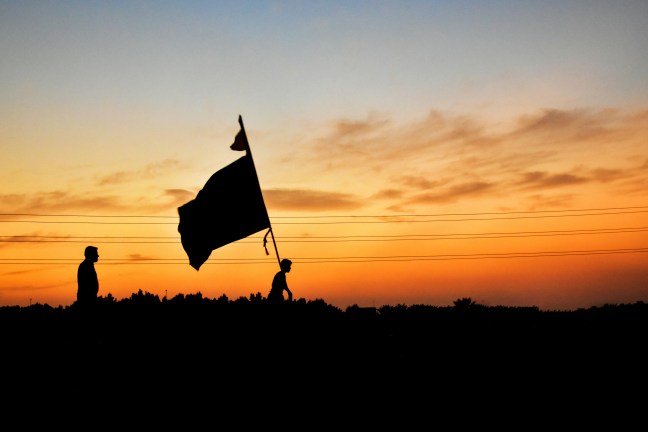
One of the most devastating legacies governments left us with was the forging and reinforcing of national identity. The creation of nations and national flags is a bizarre feature of the human species that can only be understood through the lens of power and corruption i.e. government. The oligarchs of this world were keen from the very start to brand their own people with flags, religions, languages and other cultural paraphernalia much like cattle going through an ear-marking ritual, thousands of years before fascism even became a word. Passports were created to ensure that people can be owned, forced to choose sides on a border and fight each other if necessary. National, religious and other identity always served the leaders more than their people. It is a weapon of economic and imperialist agendas responsible for the death of hundreds of millions of human souls in the trenches of war.
The centralisation of power and resources turned governments into weapons of mass destruction and ecological fraud. Governments significantly expedited the exhaustion of resources, widened inequality to previously unimaginable levels, and alienated almost every citizen who sooner or later felt the cold, heartless hand of indifference from the very people who had been elected to represent them. This was, and still is, largely what we call government. Even as most of the world transitioned from monarchy to representative democracy, most of the downsides of governance persist into the present day. It doesn’t take a magnifying glass to see them.
Governments did not somehow devolve into the distant, corrupt, bureaucratic entities we experience today. They were set up as such from the very beginning so that citizens lack access to power, become despondent, and settle into a powerless existence. For every government in the world today that genuinely represents its people, you will find at least another hundred who don’t.
It doesn’t take much effort to argue that government represents neither people nor a privileged class of humans. It represents, defends, and protects what is behind every single one of humanity’s decisions: money, wealth, and toxic growth. The reason why regimes rise and fall is always the underlying economics. Governments are constantly hostage to the macroeconomic indicators they so desperately try to control but always end up controlling them instead. This is why all governments have no option but to whore themselves out to corporate sponsors and oligarchs. Government policy is driven not by ethics but by the needs of capital to grow and expand at the expense of society. In exchange for selling out, governments get to live another day fed by the hand of their corporate sponsors.
As terrifying as it may sound, governments have become instruments of capital. This begs the question: is capital sentient? Despite being an abstract, mechanistic, non-DNA based entity, money behaves very much like a life form: it too needs to secure its future existence, which it does by pursuing profit. Through the creation of money humanity unintentionally gave rise to a new lifeform which eventually parasitised it. Concealing itself within the pretence of progress, the parasitic money entity quickly grew until it established itself firmly within human society. It developed ways of propagating itself while providing its human hosts with a reward for participating in this intimate symbiosis: a currency that they can use any which way they want, unaware that each time they do, they only strengthen the monetary virus. Money is the dominant partner in this symbiosis while government is the manikin in the shop window, luring customers in with a human-looking face, feeding the illusion that real humans sit behind the wheel of the economic locomotive. But make no mistake: it is money which runs the show, given that each decision our leaders make is based on profits, not ethics.
All governments are corrupt by nature. Like any biological life form, they will do anything to survive. Money and government are selfish life forms ruling society with one and only objective: to resist anything and anyone who threatens economic expansion. It was one of our gravest mistakes to create political and financial institutions which attained so much power and autonomy that they eventually became super predators of society and the planet.
By enslaving humans to money this system created an illusion of a level-playing field: in theory everyone has access to money if they work hard, exploit others and the planet. We are forced to viciously compete within an unsustainable, extractive system that masquerades as a free market of opportunity regardless of place, race, salutation or occupation while in reality money and power are concentrated in the hands of the few. In a world where everyone is a slave to the tyranny of money, no one can ever be truly free. Democracy and equality can only exist as illusions.
The reason why humanity is unable to put the brakes on its self-destruction is that it long ago outsourced civilisation to the self-destructive money entity. The life form in charge of our world is an increasingly sentient incarnation of profit which has found the perfect hiding place within government. As long as global capital continues to parasitise government structures, this society will lack both the self-awareness and sovereignty needed to rise above its situation. There is currently no “off” switch and no human driver at the wheel of this automated train, because this system now completely owns us.
If all this sounds too dystopian to believe, it is because our only reality so far has been our experience of this symbiosis between power and money. Throughout our history we have consistently challenged the very limits of our imagination, yet we continue to strictly forbid ourselves from dreaming of a society without money and personally-attributed wealth. If we were to prioritise long-term survival and true happiness over this self-destructive version of prosperity, a moneyless society would not simply be a fantasy. It would become achievable. If power was uncoupled from capital, governments would be able to fulfil their purpose.
It looks like this civilisation has already conceded its defeat to the money entity. Most humans today consider capitalism inevitable. This means that they consider natural destruction, the climate crisis, colonialism, exploitation, inequality and racism inevitable. Money may have helped this civilisation evolve but it also amplified greed, enabled corruption and normalised toxic growth. As long as there are oligarchs who want to exploit for profit and people who are desperate to be exploited for a salary, money will be there to facilitate this transaction.
Although there are real human lives at stake in the game of civilisation, human existence is taking the back seat in an algorithm-driven necrosystem of profit. The great tragedy of money is that it eventually turned humans into commodities within the very consumaverse they created for themselves: the value of human life itself is now pegged to the rate of diminishing returns of a global economic system going in reverse. The more this world collapses, the cheaper human life becomes.
Yet this bitter irony remains invisible. While money runs the show, humans are wholly distracted. People and government are locked into a meaningless, dysfunctional child and parent relationship: one where the child keeps hoping that the parent lives up to their expectations, while the parent is too addicted to power and money to even meet their basic obligations. As the blame game between the haves and the have nots continues, global capital counts its profits from yet another blockbuster episode of the human soap opera.
Thank you for reading. This newsletter is my main income. It is COMPLETELY FREE to subscribe to, but made possible by the generosity of paid members. If you’d like to support The George Tsakraklides View please consider a paid subscription. Thank you.
Discover more from George Tsakraklides
Subscribe to get the latest posts sent to your email.
 George Tsakraklides
Great synthesis George. Money is a by product of our ability to self reflect and claim our human supremacy over the entire physio and bio spheres. It was the unconscious invention of our inner “evil genious” . Superiority writ large. Hierarchy is a figment of our imagination. We tend to see it everywhere from our twisted, and inverted belief/imaginary place in an evolutionary process or divine process that was all about us. It helps mask our existential dread of death.
It focuses individual and collective self interest / exploitation mathematically. Even exponentially. We are now wealth addicts and have grown so large as a species, that we lack the ability to keep ourselves alive without it. We lost our perspective of all life as sacred and important to a well functioning evolutionary single entity. Separateness is another figment of our imagination. No other life form can think they have a “divine right” to use/exploit for their sole existance. We are not really “intelligent” depending on how you define the concept. We are in overshoot so far that we are doomed to a substansial or complete “die off” . Love Rick
We fell in love with our own fantasy of human divinity. The fantasy is beginning to unravel in spectacular fashion. Overshoot is a bitch! We need to acknowlege our mistake with humility and grace to all. Will we go peacefully into the “deep dark night” ? How ridiculous is the fact that we actually are changing the climate to our disadvantage like cyano bacteria. Love Rick.
GT: I’m new but really appreciate your writing. Sorry I can’t figure out how to change WordPress to a pay subscription….
Bought unhappiness machine anmd am reading now and Petri dish through bezos money printing press but would prefer to defund these billionaires and understand how to subscribe to you where you get most of the money.
Stick It To The Man
Many thanks for reading and subscribing! And I hear you loud and clear about Amazon.
Miracle!
Managed to figure out how to change to a paid subscription all by myself
Keep it coming GT
Complexity is the problem… The more complex society becomes, the more complex its running becomes and the more governmental instruments are needed to try to run things successfully…
precisely.. thanks
I have just realised that the reason why you sound like nobody else is because you come from the future and what you write is what our descendents will have to learn to understand what went so horribly wrong.
hmm…yes Manja. I come from the burned future. Love, G
I recommend you to read “The Dawn of Everything” by D. Graeber and D. Wengrow.