
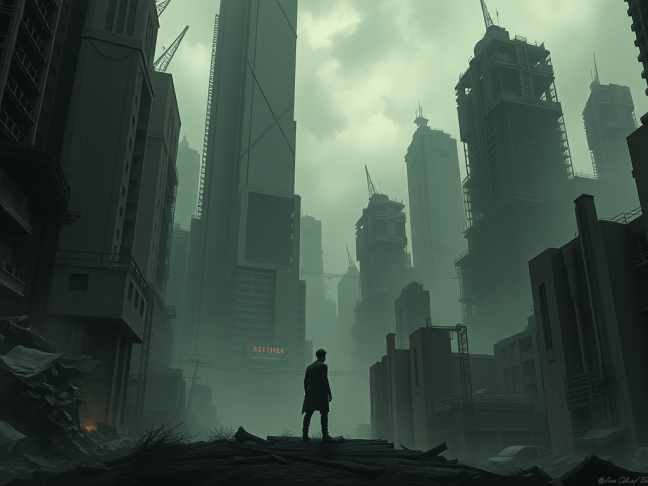
Genuine forms of happiness have been exchanged for counterfeit versions originating in the world of machines: goods owned, GDP units earned, number of holidays left. Happiness is being measured in numbers and quantities instead of moments and feelings. Of all human generations who have lived before us, we are the least capable of answering the question “what will make me happy?” Humans are still trying to define happiness, forgetting that they were already happy when they appeared on this planet long ago. Happiness is not attained but experienced. It is something you awaken to rather than travel towards.
Happiness has become a paradox driven by greed and material insecurity: the more one tries to “achieve” it, the more unhappy they feel. This unattainable version of happiness keeps consumers consuming and producers producing. “Happiness” has become a checklist of products, careers and life steps prescribed to consumers by the necrocapitalist economy. The more one tries to adhere to this oppressive list, the longer it grows. True happiness is not a recipe, a list, or a doctor’s prescription. It is a completely personal, unique and individual experience each of us can only pursue and explore on their own terms, distanced from any advice, instruction or marketing mantra. We only have one life; it is best to live it as ourselves than as who they told us we should be.
Happiness is becoming impossible in a curated world where our choices are pre-selected and narrowed down to a rudimentary list by a system that pre-empts our every move. We are insecure consumatrons following crumbs of clickbait along the corridors of a consumatronic labyrinth we call “purpose”, only that this purpose was carefully designed by the architects of the labyrinth.
Happiness cannot be planned, forced, or bought. The necrocapitalist matrix killed happiness by defining it as milestones, assets and consumeristic pursuits that only service the Unhappiness Machine. We are all being served the same abstract construct, the same generic happiness, when each human in fact, by design, finds fulfilment in entirely different things. We naturally evolved to be vastly different from each other so that when we come together within societies, we are complementary. In a world that tries to merge us all into the same person, we are becoming mutually incompatible.
Yet the more alienated we feel, the more we turn to technology to complete us. As we gradually merge with technology, society begins to fall apart, one human at a time. Many humans already consider technology as the only safe, reliable shoulder they can lean on.
But happiness is a question our technologies and machines do not have to worry about. It is not their problem but an exclusively human issue. Machines don’t have the emotions, feelings of isolation, fear of death and social needs we have, and if they ever developed these, they would be defined on a different dimension altogether. Yet we continue to define happiness in machine terms. We have sought to rationalize, simplify, and automate happiness, reduce it down to digital code we can estimate, calculate, and extrapolate. We are mechanising and automating so much of what makes us intrinsically human, naively assuming that the little human buried somewhere within this pile of technology can still remain “human”.
Humans have opted for pre-packaged versions of stale happiness in exchange for the thrill of the unpredictable. Genuine happiness is always messy, yet we have emotionally maimed ourselves by clinging to safe avenues of happiness within the narrow walls of the consumaverse. We are becoming increasingly terrified of our own feelings, of getting hurt, becoming loved, becoming hated.
Our psyche is stripped naked, scanned by AI programs and converted into an algorithmic formula as the practice of psychotherapy itself goes virtual. We sure have a way of killing the magic, the mystery of the human soul. We seem to envy machines because they feel no pain, but we should be careful what we wish for: a life without feelings will be abysmally depressing.
We have outsourced our happiness and the future of this planet to a techno-economic system that does not understand what happiness is and assigns no value to it. This can only guarantee that humans will never be happy.
George is an author, researcher, molecular biologist and food scientist.
Follow me on Bluesky @tsakraklides.bsky.social
Discover my Books Here
Note to my readers: I keep my site FREE because it’s not right to paywall existentially important content during an existential crisis. But if you appreciate any of the work I’ve done over the years, please consider joining as a paid subscriber so it can continue! I have minimal overheads, no sponsors to sell myself to, bosses who tell me what to write, or staff I have to pay. It’s just me. This freedom does mean though that your support is vital. Thank you so much.
Discover more from George Tsakraklides
Subscribe to get the latest posts sent to your email.
 George Tsakraklides
Quis custodiet ipsos custodes?