
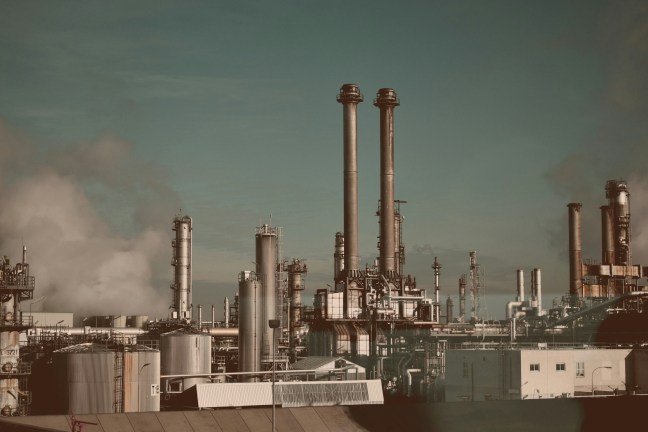
It was the Late Jurassic. Dinosaurs were still around. The planet was covered in very shallow, warm seas full of plant life. But the oceans were so warm that oxygen couldn’t penetrate them. Anything that died took a very long time to decompose without oxygen. As billions of algae and plankton perished and fell to the ocean floor, they stayed there, unable to be recycled. More and more bodies kept coming, until huge piles of dead microorganisms filled the bottom of the oceans.
Then came the sediment. Rivers, volcanos, erosion, all brought material that was deposited on top of all this dead plant life. But it still didn’t decompose. It was mummified and fossilised, as the pressure of the weight above forced carbon molecules to bond and form long chains with each other, of 10 atoms or more. This new type of rock, made of dead bodies, was kerogen, the precursor of oil and gas.
As the sediment kept piling on, the weight created incredible pressure. Kerogen was pushed further down closer to the crust, where the heat and pressure began to cook it. It broke down into shorter carbon chains, new molecules some of which were of liquid, and even gaseous form. Being much lighter in weight, they began to percolate upwards through the crust. But there were too many rocks in their way. The vast majority of gas and oil became safely trapped deep under rock formations, creating huge, black reservoirs.
But this is a planet that recycles everything, and reuses everything. Small leaks of oil and gas made it to the surface of the crust eventually, where they spontaneously combusted. The CO2 released into the air was food for plants across the planet. It may have taken hundreds of millions of years, but Earth finally found a way to recycle, reuse, and reintegrate into its ecosystem even these chemicals that were entirely new to the planet. The long-term plan was to burn the gas and oil off, very slowly over many millions of years, with no impact to the climate. It would become fertilizer.
More than a million years ago, a mammal called Homo erectus discovered fire. A million years later, Homo sapiens created a civilisation entirely based on fire: in 1859, it drilled the first commercial oil well in Titusville, Pennsylvania, USA. Homo sapiens became an entirely saprophytic species: dependent on the consumption of the carcasses of organisms who had perished millions of years ago. As the climate warms, the shallow oceans will return. Billions of humans will die from heat, war, starvation and anoxia, buried under ocean sediment, cooked to perfection and turned into the next generation fossil fuel.
Thank you for reading. Independent writing like this exists because readers choose to support it. If you find value in these essays, consider becoming a paid subscriber.
Discover more from George Tsakraklides
Subscribe to get the latest posts sent to your email.
 George Tsakraklides