
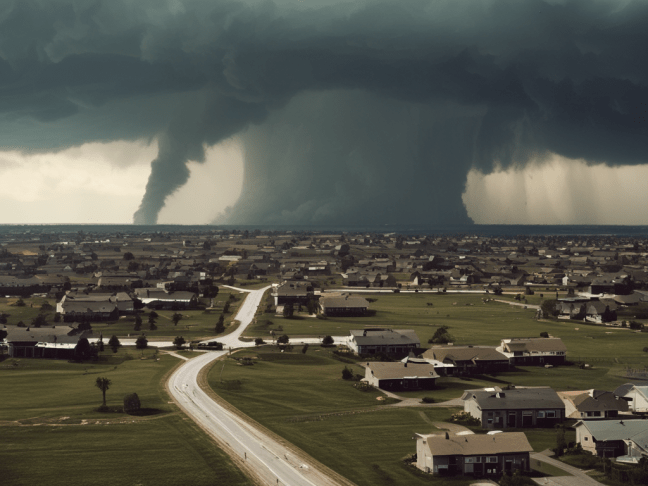
As the planet slips further into “uncharted territory”, a phrase which now almost every meteorologist uses, it is time for climate science to stop pretending: to admit, publicly, that climate science as a scientific discipline is in uncharted waters itself. This admission will never happen of course, as long as scientists want to hold on to their salaries. The illusion must go on.
What’s not an illusion is that climate scientists have absolutely no clue right now where exactly this planet is going. All they know, and which they keep reminding us of, is that “things are worse than predicted” i.e. climate science is largely failing to make forecasts. As a multi-disciplinary scientist myself with an Earth Science concentration at some point in my studies, I’m not surprised. On one hand, admitting incompetence would be a gift to climate change deniers. On the other, human nature is such that we rarely admit failure.
The main reason why climate science is virtually dead at this point is simply that the models, theorems, assumptions and parameters on which it operates are based on a planet which no longer exists. We are almost back to square one. Just as we were beginning to understand this planet, a massive knowledge gap has opened up: our old data is not as useful anymore, and the current data is only as good as yesterday, on a planet which is now constantly changing as the climate crisis deepens.
For any scientific discipline to thrive it is essential that the system it studies does not change. Whether it is biology, cosmology, physics or climate science, in order to study these systems, they have to remain relatively constant. This is not just a “nice to have”. It is essential. If one day gravity works and the next it doesn’t, you cannot postulate theories, establish observations, or make predictions. If one day chromosomes are made of DNA and the next they are made of RNA, much of your previous work, and your understanding of biology, genetics and evolution, is now useless. On a planet whose energy balance is out of control and ocean currents are being rewired, many of the observations we had relied upon to build our knowledge of the climate now belong in the trash. Understanding how Earth’s climate works during a climate crisis is literally like trying to learn how a car is supposed to work by observing the only, dishevelled model you have: one where something new breaks every five minutes. An Earth system which is on the move is incredibly difficult to study because it begs the question: which system are you trying to understand exactly? The Earth of yesterday, of today, or of tomorrow? The actual mechanics of our incredibly complex climate system have shifted already, meaning that the “textbook Earth” that climate scientists are familiar with and spent years of their lives studying, is effectively no longer valid as a model. Both the experience they gained over years as well as the actual climate data collected, belong to a planet which no longer exists. We have new parameters in the climate, new players, as well as old ones who are behaving differently.
We have entered a Great Uncertainty whereby, even if we try to speed up and understand this new planet, by the time we do this it will have changed again, as new climate tipping points are crossed. From global ocean currents to glaciers, to the permafrost and rainforests, all moving parts of the climate sphere are changing rapidly and radically, to comprise a brand-new planet that has never been studied before, by anyone. This means that, although we may still be looking at familiar features e.g. hurricanes, ice sheets, atmospheric pressure systems etc, the behaviours and relative contributions of these familiar characters on the climate machine are changing. Given that many of these changes are believed to have exponential impacts (the so-called tipping points), this planet will already have changed quite significantly by the time you have finished reading this article.
Even AI can do very little to sort this out, given that historical data belong to the old planet, not today’s Earth. More importantly, all current weather datasets are only valid for as long as the planet stays in its current state: not very long, since it appears that with all the acceleration of the climate crisis taking place, this planet is changing colours faster than a chameleon. The biggest problem climate science has on its hands right now is being asked to study a planet literally as that planet changes.
The problem with studying today’s climate isn’t only that the Earth has changed. It is that it keeps changing, and that it has become essentially non-circular. The energy balance of the planet (energy in vs energy out) used to be close to zero, which means that whatever energy the planet had, remained on the planet and neither increased or decreased. The fact that this planet now has an overall positive energy balance i.e. constantly absorbing new energy from the sun, means that it is no longer a closed, circular system. By having transitioned from a closed to an open system, this planet has all of a sudden become incredibly much more complex to model, analyze and predict.
So climate science as we knew it is almost dead, or at least, it has become orders of magnitude more difficult. Why is nobody talking about this?
Because of a number of typical human behavioural biases and hindrances. Climate scientists have collectively failed to panic, because of the usual, sterile corporate culture which looks down upon, and in fact discredits, emotional reactions to data. This institutional repression of freedom in science goes back hundreds if not thousands of years, and has progressively worsened the more science became a tool for capital rather than for humanity. Academic circles are famous for morphing into toxic echo chambers where popular theories are quick to ascend into stardom, and outliers or critics quick to be labelled as witches and heretics.
Most of all, science is forbidden from crossing the knowledge-society barrier, to actually articulate the implications of its data and its findings on wider society. Climate scientists collect the evidence, but the most crucial role, that of interpreting it, is left to politicians and PR spin doctors. The greatest failure of climate science has been the failure to panic in the most public and affirmative way, a result of the self-censorship of emotive responses regarded as “irrelevant to the research”. We recently saw climate data not just be discarded but be forbidden from being mentioned within the context of a trial of five protestors in the UK. Such is the silo separation between science and society today.
Anyone who is a climate scientist today is as much a social scientist as they are a climate scientist whether they want to accept this responsibility or not, and this is what most climate scientists have failed to realise: that although their science may be in crisis, we need climate scientists themselves more than ever. The way they talk about their findings and what they do with them determines the future of this society. It doesn’t matter if climate scientists cannot accurately say if this is code red, or code purple. They should be labelling it as code “extinction” or “collapse” and communicating it accordingly. This is not a time for caution. This is a time for action, and for activism.
Climate science may be virtually pointless these days, but we need it more than ever. Not as a physical science, not as a set of predictions, but as a social movement which helps interface data, humanity and the future of Earth. Every climate scientist at this point should be an activist. Acting otherwise would be a fatal disservice to society.
George is an author, researcher, molecular biologist and food scientist. You can follow him on Twitter @99blackbaloons
Discover my Books Here
Out Now: Frankenpolitics
Note to my readers: I keep my site FREE because it’s not right to paywall existentially important content during an existential crisis. But if you appreciate any of the work I’ve done over the years, please consider joining as a paid subscriber so it can continue! I have minimal overheads, no sponsors to sell myself to, bosses who tell me what to write, or staff I have to pay. It’s just me. This freedom does mean though that your support is vital. Thank you so much!
Discover more from George Tsakraklides
Subscribe to get the latest posts sent to your email.
 George Tsakraklides
One thing I don’t understand about the five protestors in the UK: how does climbing on gantries causes 51,000 hours of driver delays, £765,000, and a £1.1mn policing bill. It’s like the actual criminal actions in this case were greatly exagerated.
Yes, energy coming from the sun. At least I got that right. And I ‘gather’ that that other planets have been undergoing changes as well; “heating?” The frustration at seeing “climate change” exploited for social manipulation, control, and profit has rendered me mute with outrage and horror. The relief at encountering a language here verging on the real territory as I perceive it is inexpressible. Thank you.