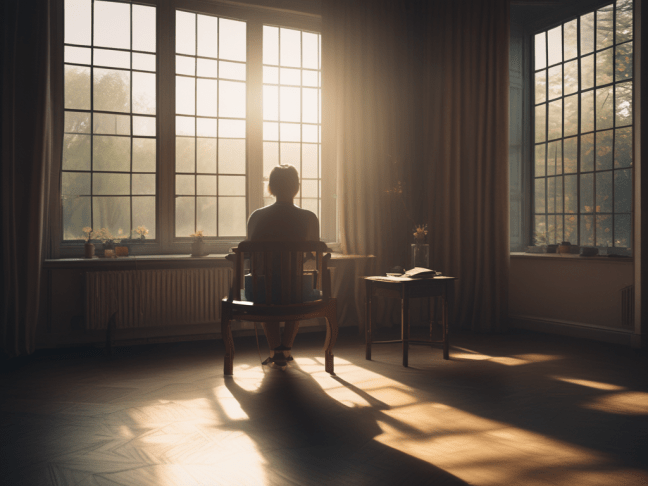
How much time do I have left? This is the very first question which pops into a terminal patient’s head when they first hear their diagnosis. They simply want to know how much life they have left, down to the number of days, if possible. Every single day remaining has now gained a new significance, new value. There is no time for regrets, literally. They need to wrap up their unfinished business, say their goodbyes to loved ones, contemplate, look back on their life, spend hours staring at the sea, find peace and say their own goodbye to a world that they will never see again. Say goodbye to existence.
Our civilisation is a terminal patient who refuses to have any of the self-reflections that a typical terminal patient would have. It is a self-destructive chain smoker continuing to smoke as the cancer metastasises all over their body. This patient is ignorant of their own existence, of time, space, and of the existence of the children they are leaving behind in this collapsing world. This patient is unable to even ask the question “how much time do I have left”. They don’t want to know the answer.
But the metaphor of patient vs. disease vs. existence is incomplete. Because when a patient dies, the world remains. In this case, the world is collapsing along with the patient. This civilisation may be leaving this world, but the world is leaving us as well. Even if humans had the choice to come back to this world one day, it wouldn’t be there. Because we are taking with us, to our toxic cemetery, a very big portion of Earth’s 10 million species, along with the planet’s weather machinery. The state of the planet that we leave behind is highly questionable, and left to anyone’s imagination. What is happening here is much bigger than a terminal disease: the patient, the doctor, the hospital and what is outside the hospital will all be gone, or at least replaced by an uninhabitable, most likely unrecognizable version of the current world.
So my advice is: surrender to the collapse, but do not give up on existence, like a patient who knows that every moment left still counts for something. An alternative question to the myopic, lazy question of “how much time do we have left” could be: how much can we preserve or even repair? How much can we delay the onset of this disease? And how do we make the best of the time we have left?
For many victims of the climate crisis and necrocapitalistic overshoot who have already paid the price, it is too late. And for the children, the next generation, a shockingly reduced life expectancy is a certainty. We owe it both to those who have already departed and those who will pay for the excesses of this civilisation, to stop thinking about how many more years, days and seconds we have left, and start focusing on what we can do right now. We owe it to the planet.
My other advice is stop preparing. Stop hoarding stuff for the impending Apocalypse, because it won’t help you. We live in organised societies, so unless you manage to isolate yourself completely and sustainably (at your own risk), it is most certain that you will become a target for attack if you are perceived as privileged. While preparations may give you the illusion that you have achieved some level of peace of mind, in reality you have made yourself a target. The more you plan, the more you will feel inadequate in a new world which will be largely devoid of healthcare, reliable food supply, clean water, electricity and most of all compassion and understanding from the people whose country you have emigrated to, because yours was either too hot, too fascist or too nuked by another nation to continue to live in. The more you panic right now, the more you are forgetting that we are all in this together and that our strength lies not in individualistic preparations, but collective resilience.
George is an author, researcher, molecular biologist and food scientist. You can follow him on Twitter @99blackbaloons
Discover my Books Here
Note to my readers: I keep my site FREE because it’s not right to paywall existentially important content during an existential crisis. But if you appreciate any of the work I’ve done over the years, please consider joining as a paid subscriber so it can continue! I have minimal overheads, no sponsors to sell myself to, bosses who tell me what to write, or staff I have to pay. It’s just me. This freedom does mean though that your support is vital. Thank you so much.
Discover more from George Tsakraklides
Subscribe to get the latest posts sent to your email.
 George Tsakraklides
Good article. I am in my 70’s, and while I’m still pretty active, I get tired after a fast walk or kayak outing, and have to take a nap! I don’t want to spend my valuable free time (I also still have to work), volunteering or being an activist for a dying civilization. Yet I feel a bit guilty or defensive about that, so I appreciated your article.
Thank you
Love ya George, but have to disagree here. Yes, totally agree our civilization is terminal, and likely our species too, and a lot more species besides, because we humans do seem to have a talent for disaster and chaos. But the world isn’t collapsing and when we go we won’t take it with us. The planet will be fine. Might take maybe a few hundred thousand years to recover from the mess we leave, maybe a few million. But that’s nothing for a planet. The planet’s recovered from this sort of thing just fine, at least seven times already that we know of. Maybe more, what do we know? The last few hundred years or maybe the last few hundred millenia are proof positive that homo sap for sure doesn’t know everything. Or maybe anything. What do we know, we’re just kids. Been here for what, maybe a quarter million years? That’s nothing for a species. A tiny hiccup offshoot on the tree of life. Every species goes extinct eventually, sure, but the real question is, how successful were they while they were here? Species success is measured by how long they – we – manage to stick around. But here we are, only a measly quarter million years and heading for the exits. That makes us a, well, Not successful species. Right? A dead end. One more of those failed random evolutionary experiments. Oh well, most of them fail, always have. That’s how random works. But it’s okay, that’s how planets work too. Try stuff, doesn’t work out, no worries, try something else. Lather rinse repeat, and repeat again, and again and again and again. We humans get confused by geologic timescales, and forget that’s how planets work. We forget that we’re just blips, and pretend we’re Important and Special and Unique but we aren’t and never were. We weren’t the biggest, weren’t the most impactful, and for sure weren’t the longest to stick around. This is just a headcold for a planet. Planet will be fine, and plenty of other acts will follow ours. I wonder what happens next? So, yes absolutely surrender to the collapse, yes absolutely appreciate the moment. Because yes absolutely we’re all gonna die. But when was that not always true?
Yes to that last bit in particular. I’ve had similar thoughts so it’s interesting to hear it from someone who seems to have a clue.
The only useful preparation I can think of is some sort of personal psychic, psychological, spiritual whathaveyou development to make one more resilient to change. Also, if it’s possible, also work on one’s capacity to martial cooperative instincts among the other monkeys in one’s immediate local.
🙏☠️❤️
See Facebook group = Near Term Human Extinction
Yes I’ve known them for years thanks